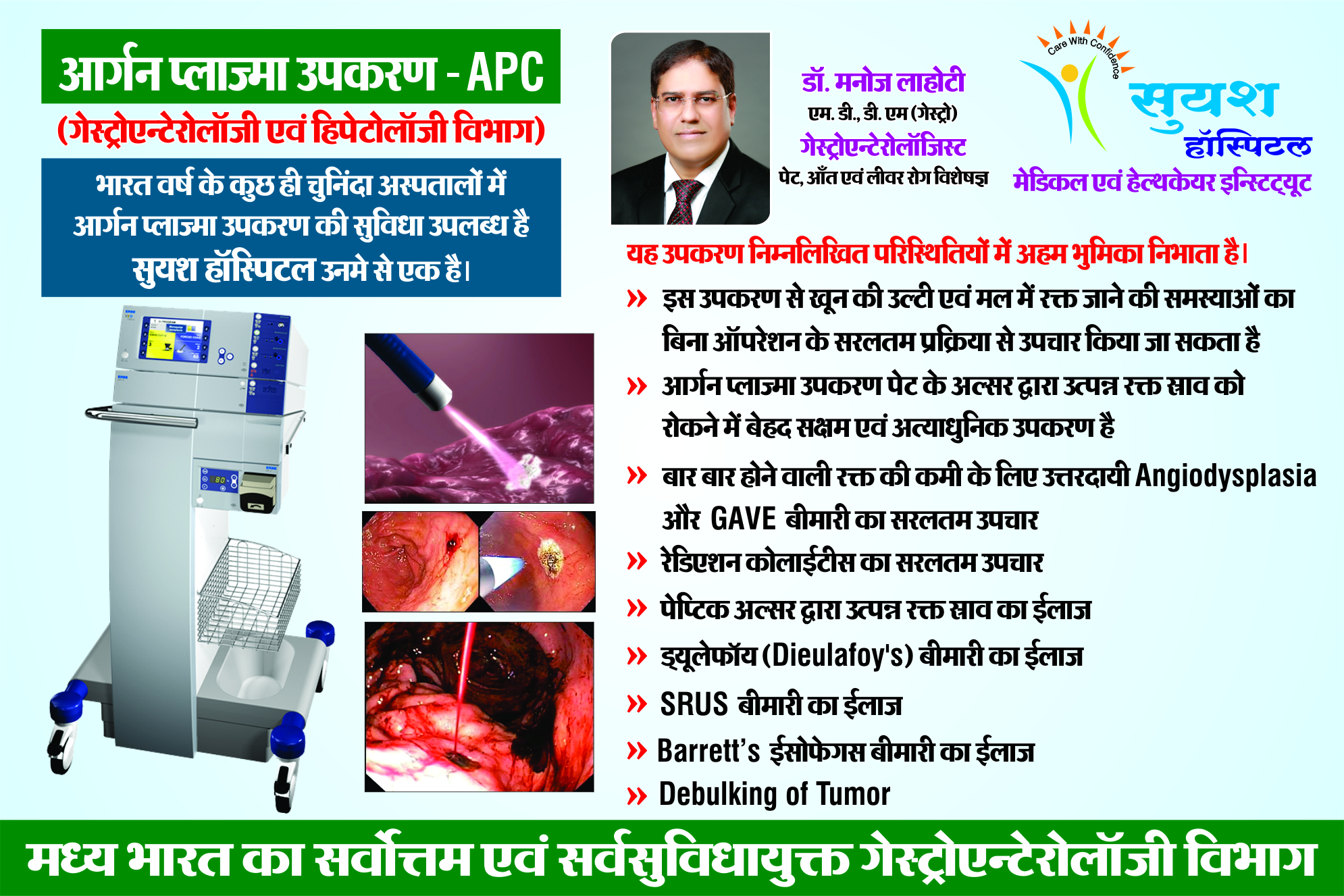
Dr. Manoj Lahoti is highly experienced in performing Argon Plasma Coagulation with precision and safety. He utilizes advanced endoscopic techniques to effectively manage bleeding disorders and superficial gastrointestinal lesions. His approach focuses on accurate diagnosis, targeted therapy, and minimizing the need for surgery. With expertise in handling complex and high-risk cases, he ensures excellent outcomes with minimal complications. Patients benefit from faster recovery, reduced hospital stay, and personalized, evidence-based gastrointestinal care.
Argon Plasma Coagulation (APC) – Advanced Endoscopic Treatment
Argon Plasma Coagulation (APC) is a modern, minimally invasive endoscopic technique. It is used to control bleeding and treat abnormal tissues in the gastrointestinal tract. APC uses ionized argon gas (plasma) to deliver controlled thermal energy. This energy coagulates (cauterizes) targeted tissue without direct contact.
It is widely used for treating gastrointestinal bleeding. Common indications include bleeding ulcers and vascular lesions.
It is effective in conditions like angiodysplasia. Also used in radiation proctitis and gastric antral vascular ectasia (GAVE). APC helps remove or ablate superficial tumors and polyps. It is useful in managing Barrett’s esophagus with dysplasia. The procedure is performed during endoscopy. It is quick and usually completed within a short duration. No surgical incision is required. It offers precise and controlled depth of tissue treatment. Reduces the risk of perforation compared to other methods. It is generally safe and well-tolerated by patients. Can be repeated if necessary for optimal results. Helps in reducing the need for major surgery.
Provides immediate control of active bleeding. Short hospital stay or often done as a day-care procedure.
Promotes faster recovery and minimal discomfort. Suitable for elderly and high-risk patients. Plays an important role in therapeutic endoscopy. Enhances overall gastrointestinal treatment outcomes.
A reliable and effective technology in modern GI care.