
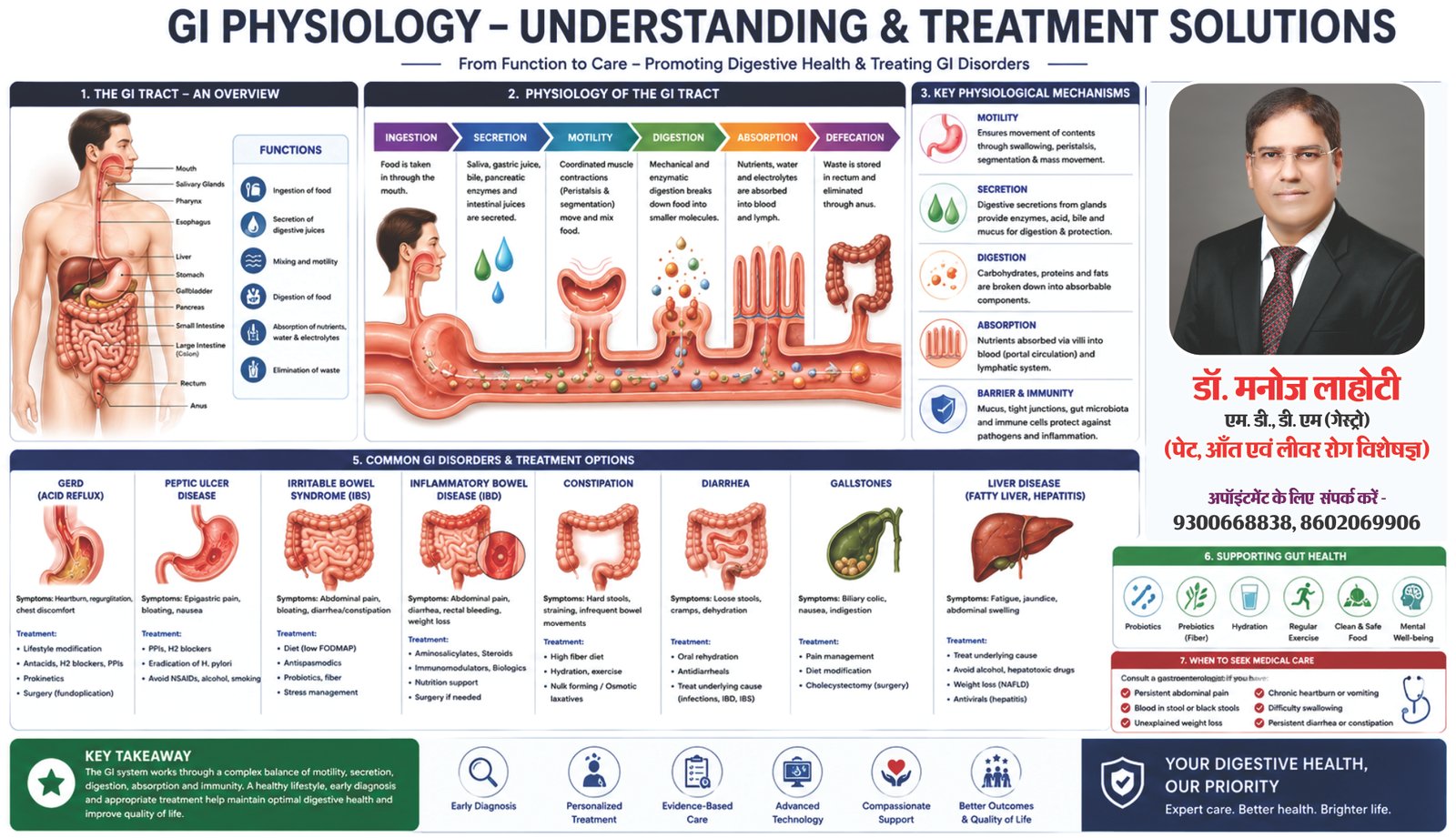
Dr. Manoj Lahoti specializes in advanced GI physiology testing to accurately diagnose functional gastrointestinal disorders. His approach focuses on identifying the root cause using precise diagnostic tools and offering targeted, non-invasive treatments like biofeedback and tailored medical therapy. He ensures personalized care plans that improve long-term outcomes and quality of life. Patients benefit from evidence-based management, avoiding unnecessary procedures and achieving effective symptom control.
Oesophageal Manometry
Measures pressure and muscle coordination of the esophagus during swallowing. Helps diagnose motility disorders like achalasia and severe reflux disease. Guides appropriate treatment planning for swallowing difficulties.
Anorectal Manometry
Evaluates the function of the rectum and anal sphincter muscles. Useful in patients with constipation or fecal incontinence. Helps plan therapies like biofeedback or surgical correction.
Colonic Transit Study
Assesses how quickly food moves through the colon. Useful in chronic constipation to identify slow transit issues. Guides medical or lifestyle-based treatment strategies.
FibroScan of Liver
A non-invasive test to measure liver stiffness and fat content. Helps detect fibrosis, cirrhosis, and fatty liver disease. It is a quick, painless alternative to liver biopsy in many cases.
pH Metry & Impedance Study
Measures acid and non-acid reflux in the esophagus over 24 hours. Helps diagnose GERD and refractory reflux symptoms. Useful in tailoring anti-reflux therapy.
Urea Breath Test
Detects Helicobacter pylori infection in the stomach. Simple, non-invasive, and highly accurate test. Used for diagnosis and post-treatment confirmation.
Hydrogen Breath Test
Assesses carbohydrate malabsorption and small intestinal bacterial overgrowth (SIBO). Measures hydrogen levels in breath after specific sugar intake. Helps diagnose causes of bloating, gas, and diarrhea.
Biofeedback Therapy
A non-invasive therapy to retrain bowel and pelvic floor muscles. Used in constipation and fecal incontinence.
Improves muscle coordination and patient control over bowel function.